Many custom options


And formats



Life Force in Chinese / Japanese
Buy a Life Force calligraphy wall scroll here!
Personalize your custom “Life Force” project by clicking the button next to your favorite “Life Force” title below.
1. Life Force
2. Life Energy / Spiritual Energy
3. Vitality
4. Mujo no Kaze / Wind of Impermanence
6. Reiki
Life Force
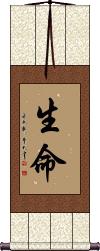
This Chinese, Korean and Japanese word means “life force” or simply “life.”
The first character means “life” or “birth.” The second means “life” or “fate.” Together they create the meaning of “life force,” though some will translate this as “existence” and sometimes “vitality.”
See Also: Vitality | Birth Old-Age Sickness Death
Life Energy / Spiritual Energy
Chi Energy: Essence of Life / Energy Flow
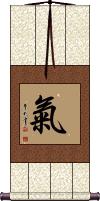
This 氣 energy flow is a fundamental concept of traditional Asian culture.
氣 is romanized as “Qi” or “Chi” in Chinese, “Gi” in Korean, and “Ki” in Japanese.
Chi is believed to be part of everything that exists, as in “life force” or “spiritual energy.” It is most often translated as “energy flow” or literally as “air” or “breath.” Some people will simply translate this as “spirit,” but you must consider the type of spirit we're talking about. I think this is weighted more toward energy than spirit.
The character itself is a representation of steam (or breath) rising from rice. To clarify, the character for rice looks like this: 
Steam was apparently seen as visual evidence of the release of “life energy” when this concept was first developed. The Qi / Chi / Ki character is still used in compound words to mean steam or vapor.
The etymology of this character is a bit complicated. It's suggested that the first form of this character from bronze script (about 2500 years ago) looked like these samples: 

However, it was easy to confuse this with the character for the number three. So the rice radical was added by 221 B.C. (the exact time of this change is debated). This first version with the rice radical looks like this: 
The idea of Qi / Chi / Ki is really a philosophical concept. It's often used to refer to the “flow” of metaphysical energy that sustains living beings. Yet there is much debate that has continued for thousands of years as to whether Qi / Chi / Ki is pure energy or consists partially or fully of matter.
You can also see the character for Qi / Chi / Ki in common compound words such as Tai Chi / Tai Qi, Aikido, Reiki, and Qi Gong / Chi Kung.
In the modern Japanese Kanji, the rice radical has been changed into two strokes that form an X.
 The original and traditional Chinese form is still understood in Japanese, but we can also offer that modern Kanji form in our custom calligraphy. If you want this Japanese Kanji, please click on the character to the right instead of the “Select and Customize” button above.
More language notes: This is pronounced like “chee” in Mandarin Chinese, and like “key” in Japanese.
This is also the same way to write this in Korean Hanja where it is Romanized as “gi” and pronounced like “gee” but with a real G-sound, not a J-sound.
Though Vietnamese no longer use Chinese characters in their daily language, this character is still widely known in Vietnam.
See Also: Supernatural Energy | Vitality | Eternal Wheel of Life | Birth Old-Age Sickness Death | Wolf Spirit / Soul of a Wolf
Vitality
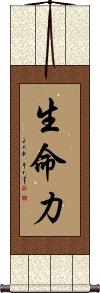
生命力 can mean “vitality” or “libido.”
The first two characters mean “life” or “life force.” The last character is a common word that means “strength.” So together, you get the meaning of “life strength” which is the essence of vitality.
Some will also translate this word as “good health.”
See Also: Strong / Healthy
Mujo no Kaze / Wind of Impermanence
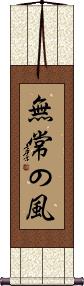
無常の風 is an old Japanese proverb that means the wind of impermanence or the wind of change in Japanese.
This can refer to the force that ends life, like the wind scattering a flower's petals. Life is yet another impermanent existence that is fragile, blown out like a candle.
The first two characters mean uncertainty, transiency, impermanence, mutability, variable, and/or changeable.
In some Buddhist contexts, 無常 can be analogous to a spirit departing at death (with a suggestion of the impermanence of life).
The last two characters mean “of wind” or a possessive like “wind of...” but Japanese grammar will have the wind come last in the phrase.
Spiritual Soul Mates
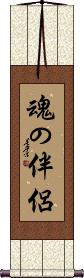
魂の伴侶 is a Japanese-only title for soulmates.
魂 means soul, spirit, immortal soul (the part of you that lives beyond your physical body), or the conscious mind. In the Buddhist context, this is vijñāna or viññāṇa (consciousness, life force, or mind).
の is a possessive article that connects everything here.
伴侶 means mates, companions, partners, and spouses.
Reiki
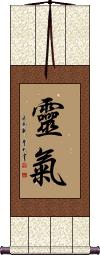
靈氣 is the title of a healing practice now found globally but with origins in Japan.
Special note: Outside of the context of the healing practice of Reiki, this means “aura” or “spiritual essence that surrounds all living things.” A Japanese person unfamiliar with the practice will take the “aura” meaning.
Reiki is a technique for stress reduction and relaxation that also heals. It can be compared to massage but is based on the idea that an unseen “life force energy” flows through us and is what causes us to be alive. If your life force energy is low, you'll be more likely to get sick or feel stressed. If your life force energy is abundant and flowing well, you become more capable of being happy and healthy.
There is many information available if you want to Google this term - my job is to offer the calligraphy while you can decide if it is right for you.

Note: We are showing the ancient (traditional) form of the Reiki Kanji. I have seen Reiki written with the slightly simplified version and this more classic form. If you want the form of Reiki with the two strokes in the shape of an X on the second character and the modern first character, simply click on the Kanji characters to the right.
Note: 靈氣 is also a Chinese word, but in Chinese, these characters create a word that refers to a smart person or someone with high aspirations. It is not read as a healing method in Chinese.
In Korean Hanja, this can be read as a “mysterious atmosphere” by a Korean who is not familiar with the practice of Reiki (still has a cool meaning in Korean).
Daodejing / Tao Te Ching - Chapter 27
The Mastery of Effortless Skill

Chapter 27 of the Daodejing reveals a profound truth about mastery: the highest skill leaves no trace, requires no force, and appears almost invisible.
善行無轍跡,
善言無瑕謫,
善數不用籌策,
善閉無關鍵而不可開,
善結無繩約而不可解。
是以聖人常善救人,
故無棄人;
常善救物,
故無棄物。
是謂襲明。
故善人者,不善人之師;
不善人者,善人之資。
不貴其師,不愛其資,
雖智大迷,
是謂要妙。
The sage moves through life with such natural harmony that nothing seems imposed; doors need no locks, knots require no rope, and actions leave no mark behind.
This is the essence of wúwéi (effortless action), where true ability arises from deep alignment with the Tao rather than deliberate effort.
At its heart, this chapter teaches compassion without exception. The sage “abandons no one and nothing,” recognizing value in all people and all things. Even those who seem flawed or unrefined are not rejected, but understood as part of a greater whole with each person both a student and a teacher in the unfolding of life.
Laozi reminds us that wisdom is not about perfection or control, but about subtle awareness. The truly skilled individual does not rely on tools, rules, or rigid structures; instead, they embody an intuitive understanding that makes their actions naturally complete.
In this way, excellence becomes quiet, effortless, and beyond imitation.
This teaching also reflects a deeper philosophical insight: Opposites are interdependent. The “good” person learns from the “not good,” and the “not good” provides the material for growth. To reject either is to misunderstand the balance of existence itself.
As calligraphy, Daodejing Chapter 27 serves as a reminder to cultivate inner mastery rather than outward display. It is a meditation on refinement, humility, and the quiet power of skill perfected through harmony with the natural order.
Note: The Chinese text used here is based on the early Mawangdui silk manuscript tradition (2nd century BCE). The Guodian manuscripts do NOT preserve Chapter 27 in full form.
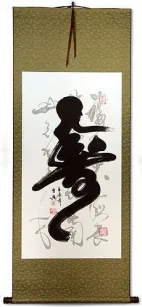
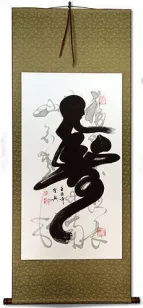
This in-stock artwork might be what you are looking for, and ships right away...








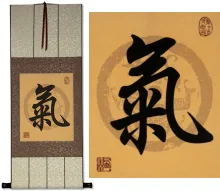
Not the results for Life Force that you were looking for?
Below are some entries from our dictionary that may match your Life Force search:
| Characters If shown, 2nd row is Simp. Chinese |
Pronunciation Romanization |
Simple Dictionary Definition |
生命 see styles |
shēng mìng sheng1 ming4 sheng ming seimei / seme せいめい |
More info & calligraphy: Life Force(1) life; existence; (n,n-suf) (2) (See 役者生命) (one's) working life; career; (3) (occ. read いのち) life force; lifeblood; soul; essence |
生命力 see styles |
shēng mìng lì sheng1 ming4 li4 sheng ming li seimeiryoku / semeryoku せいめいりょく |
More info & calligraphy: Vitalityvitality; (one's) life force |
炁 see styles |
qì qi4 ch`i chi |
(Daoism) Qi; vital force; life force (variant of 氣|气[qi4]) |
勢い see styles |
ikioi いきおい |
(adv,n) (1) force; vigor; vigour; energy; spirit; life; (2) influence; authority; power; might; (3) impetus; momentum; course (of events); (adverbial noun) (4) naturally; necessarily; (surname) Ikioi |
命根 see styles |
mìng gēn ming4 gen1 ming ken meikon / mekon めいこん |
lifeblood; the thing that one cherishes most in life; (coll.) family jewels (male genitals) life A root, or basis for life, or reincarnation, the nexus of Hīnayāna between two life-periods, accepted by Mahāyāna as nominal but not real. |
神気 see styles |
kamiki かみき |
(1) qi; mysterious life force that makes up everything; (2) spirits; mind; (3) divine atmosphere; mysterious presence; (surname) Kamiki |
気血水 see styles |
kikessui きけっすい |
life force, blood, and colourless bodily fluids (three elements that constitute an organism according to traditional Chinese medicine) |
生大刀 see styles |
ikutachi いくたち |
(archaism) sword brimming over with life force |
浩然の気 see styles |
kouzennoki / kozennoki こうぜんのき |
(exp,n) (1) (from Mencius) universal life force; source of animation for all things; (exp,n) (2) free spirit; mindset unencumbered with worldly concerns |
凡夫十重妄 see styles |
fán fū shí zhòng wàng fan2 fu1 shi2 zhong4 wang4 fan fu shih chung wang bonbu jū jūmō |
The serious misfortunes of the sinful man in whom the Ālaya-vijñāna, the fundamental intelligence, or life force, of everyman, is still unenlightened; they are compared to ten progressive stages of a dream in which a rich man sees himself become poor and in prison. |
Variations: |
ikioi(p); ikiyoi(ik) いきおい(P); いきよい(ik) |
(1) force; vigor; vigour; energy; spirit; life; (2) influence; authority; power; might; (3) impetus; momentum; course (of events); (adverb) (4) naturally; necessarily |
The following table may be helpful for those studying Chinese or Japanese:
| Title | Characters | Romaji (Romanized Japanese) | Various forms of Romanized Chinese | |
| Life Force | 生命 | seimei / inochi | shēng mìng sheng1 ming4 sheng ming shengming | |
| Life Energy Spiritual Energy | 氣 气 / 気 | ki | qì / qi4 / qi | ch`i / chi |
| Vitality | 生命力 | seimeiryoku | shēng mìng lì sheng1 ming4 li4 sheng ming li shengmingli | |
| Mujo no Kaze Wind of Impermanence | 無常の風 | mu jou no kaze mujounokaze mu jo no kaze | ||
| Spiritual Soul Mates | 魂の伴侶 | tamashii no han ryo tamashiinohanryo tamashi no han ryo | ||
| Reiki | 靈氣 灵气 霊気 | reiki | líng qì / ling2 qi4 / ling qi / lingqi | ling ch`i / lingchi / ling chi |
| Daodejing Tao Te Ching - Chapter 27 | 善行無轍跡善言無瑕謫善數不用籌策善閉無關鍵而不可開善結無繩約而不可解是以聖人常善救人故無棄人常善救物故無棄物是謂襲明故善人者不善人之師不善人者善人之資不貴其師不愛其資雖智大迷是謂要妙 善行无辙迹善言无瑕谪善数不用筹策善闭无关键而不可开善结无绳约而不可解是以圣人常善救人故无弃人常善救物故无弃物是谓袭明故善人者不善人之师不善人者善人之资不贵其师不爱其资虽智大迷是谓要妙 | shàn xíng wú zhé jì shàn yán wú xiá zhé shàn shù bù yòng chóu cè shàn bì wú guān jiàn ér bù kě kāi shàn jié wú shéng yuē ér bù kě jiě shì yǐ shèng rén cháng shàn jiù rén gù wú qì rén cháng shàn jiù wù gù wú qì wù shì wèi xí míng gù shàn rén zhě bù shàn rén zhī shī bù shàn rén zhě shàn rén zhī zī bù guì qí shī bù ài qí zī suī zhì dà mí shì wèi yào miào shan4 xing2 wu2 zhe2 ji4 shan4 yan2 wu2 xia2 zhe2 shan4 shu4 bu4 yong4 chou2 ce4 shan4 bi4 wu2 guan1 jian4 er2 bu4 ke3 kai1 shan4 jie2 wu2 sheng2 yue1 er2 bu4 ke3 jie3 shi4 yi3 sheng4 ren2 chang2 shan4 jiu4 ren2 gu4 wu2 qi4 ren2 chang2 shan4 jiu4 wu4 gu4 wu2 qi4 wu4 shi4 wei4 xi2 ming2 gu4 shan4 ren2 zhe3 bu4 shan4 ren2 zhi1 shi1 bu4 shan4 ren2 zhe3 shan4 ren2 zhi1 zi1 bu4 gui4 qi2 shi1 bu4 ai4 qi2 zi1 sui1 zhi4 da4 mi2 shi4 wei4 yao4 miao4 shan xing wu zhe ji shan yan wu xia zhe shan shu bu yong chou ce shan bi wu guan jian er bu ke kai shan jie wu sheng yue er bu ke jie shi yi sheng ren chang shan jiu ren gu wu qi ren chang shan jiu wu gu wu qi wu shi wei xi ming gu shan ren zhe bu shan ren zhi shi bu shan ren zhe shan ren zhi zi bu gui qi shi bu ai qi zi sui zhi da mi shi wei yao miao | shan hsing wu che chi shan yen wu hsia che shan shu pu yung ch`ou ts`e shan pi wu kuan chien erh pu k`o k`ai shan chieh wu sheng yüeh erh pu k`o chieh shih i sheng jen ch`ang shan chiu jen ku wu ch`i jen ch`ang shan chiu wu ku wu ch`i wu shih wei hsi ming ku shan jen che pu shan jen chih shih pu shan jen che shan jen chih tzu pu kuei ch`i shih pu ai ch`i tzu sui chih ta mi shih wei yao miao shan hsing wu che chi shan yen wu hsia che shan shu pu yung chou tse shan pi wu kuan chien erh pu ko kai shan chieh wu sheng yüeh erh pu ko chieh shih i sheng jen chang shan chiu jen ku wu chi jen chang shan chiu wu ku wu chi wu shih wei hsi ming ku shan jen che pu shan jen chih shih pu shan jen che shan jen chih tzu pu kuei chi shih pu ai chi tzu sui chih ta mi shih wei yao miao |
|
| In some entries above you will see that characters have different versions above and below a line. In these cases, the characters above the line are Traditional Chinese, while the ones below are Simplified Chinese. | ||||

Successful Chinese Character and Japanese Kanji calligraphy searches within the last few hours...



