Many custom options...


And formats...



Box in Chinese / Japanese...
Buy a Box calligraphy wall scroll here!
Personalize your custom “Box” project by clicking the button next to your favorite “Box” title below...

博克斯 is the name Box in Chinese (Mandarin).

ボックス is the name Box in Japanese Katakana.
Note: Because this title is entirely Japanese Katakana, it should be written by a Japanese calligrapher.
Martial Arts
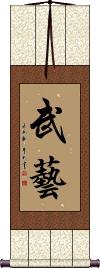
武藝 is a Korean Hanja title that means “martial arts” or “military skill.”
武藝 is also a Chinese word, but is used more often in the context of Korean martial arts.
In Korean, this is romanized as either “mu ye” or “moo ye.”
If you want to order this in modern Korean Hangul, just click the Hangul characters in the pronunciation box next to the Korean flag above.
Mi Guk Kwan
American School
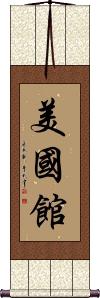
美國館 is a Korean Hanja title, which roughly means “U.S. School.”
The first two characters mean “USA” (literally: Beautiful Kingdom/Country).
The last character means “school,” “building,” and “schoolroom” in this context.
This “Mi Guk Kwan” title is used to mean “The American School of Tang Soo Do.”
If you want this in modern Korean Hangul, just click the Hangul characters in the pronunciation box next to the Korean flag above.
Concentration
Chung shin tong il
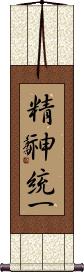
精神統一 means concentration of mind or mental concentration in old Korean Hanja and Japanese.
This concentration title is one of the 8 Key Concepts of Tang Soo Do.
You'll often see this romanized from Korean as “Chung Shin Tong Il.”
If you want to order the modern Korean Hangul version, click on the Hangul characters in the pronunciation box. Otherwise, this title is valid Korean Hanja (from the 1600 years that Korea used Chinese characters).
Five Elements Tai Chi Fist
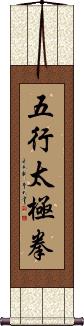
五行太極拳 is a certain school or style of Tai Chi (Taiji).
The characters literally mean “Five Elements Tai Chi Fist.”
Notes:
In Taiwan, it would be Romanized as “Wu Hsing Tai Chi Chuan” - see the standard Mandarin method above in the gray box (used in mainland China and the official Romanization used by the Library of Congress).
The last three characters are sometimes translated as “Grand Ultimate Fist,” so the whole thing can be “Five Elements Grand Ultimate Fist” if you wish.
I have not confirmed the use of this title in Korean but if it is used, it's probably only by martial arts enthusiasts. The pronunciation is correct, as shown above for Korean.
Christ
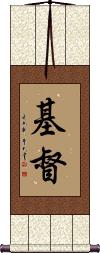
基督 is how to write “Christ” in Chinese characters, Korean Hanja, and Japanese Kanji.
This is the word used in the Chinese Union Bible (the only readily-available translation of the Bible into Chinese that I know of - published about 100 years ago). For Chinese Christians, this is the most common way to refer to Jesus Christ.
This is also the way that “Christ” is written in Japanese. But since the Japanese language is very flexible about the sounds that can be assigned to various Kanji, these characters have been assigned a pronunciation that sounds a lot like “Christ” or actually closer to the original “Christos.” In Japanese (if you don't know how the Romaji shown above in the gray box works), it sounds like “key ree sue toe” using English words/sounds. Say those four words fast, and you'll get it.
It should be noted that only Japanese Christians will be familiar with this word.
This is best defined, read, and understood with the characters together, but if you take this word for Christ apart, the first character means “fundamentals” or “foundation.” The second character can mean “leader” or “boss.”
This in-stock artwork might be what you are looking for, and ships right away...

These search terms might be related to Box:
Not the results for Box that you were looking for?
Below are some entries from our dictionary that may match your Box search...
| Characters If shown, 2nd row is Simp. Chinese |
Pronunciation Romanization |
Simple Dictionary Definition |
カチャ see styles |
gacha ガチャ |
More info & calligraphy: Katya |
コラム see styles |
goramu ゴラム |
More info & calligraphy: Collum |
ホスト see styles |
posuto ポスト |
(1) postbox; mailbox; mail box; pillar box; (2) post; position; (3) post (e.g. goalpost); (noun, transitive verb) (4) {internet} post (on a blog, social media, etc.); (can act as adjective) (5) post- (e.g. post-Cold War); (personal name) Post |
カッター see styles |
kattaa / katta カッター |
More info & calligraphy: Cutter |
ボックス see styles |
bokkusu ボックス |
More info & calligraphy: Box |
函 see styles |
hán han2 han hako はこ |
envelope; case; letter (1) box; case; chest; package; pack; crate; (2) car (of a train, etc.); (3) shamisen case; shamisen; (4) (colloquialism) public building; community building; (5) (archaism) man who carries a geisha's shamisen; (6) (archaism) receptacle for human waste; feces (faeces); (suf,ctr) (7) counter for boxes (or boxed objects) |
凾 see styles |
hán han2 han kan はこ |
(1) box; case; chest; package; pack; crate; (2) car (of a train, etc.); (3) shamisen case; shamisen; (4) (colloquialism) public building; community building; (5) (archaism) man who carries a geisha's shamisen; (6) (archaism) receptacle for human waste; feces (faeces); (suf,ctr) (7) counter for boxes (or boxed objects) A box, receptacle; to enfold: a letter. |
匚 see styles |
fāng fang1 fang |
"right open box" radical (Kangxi radical 22), occurring in 区, 医, 匹 etc |
匣 see styles |
xiá xia2 hsia hako はこ kushige くしげ |
box (1) box; case; chest; package; pack; crate; (2) car (of a train, etc.); (3) shamisen case; shamisen; (4) (colloquialism) public building; community building; (5) (archaism) man who carries a geisha's shamisen; (6) (archaism) receptacle for human waste; feces (faeces); (suf,ctr) (7) counter for boxes (or boxed objects); (archaism) toiletries case |
匭 匦 see styles |
guǐ gui3 kuei |
small box |
喼 see styles |
jié jie2 chieh |
box (dialect); used to transliterate words with sounds kip-, cap- etc |
囗 see styles |
wéi wei2 wei takakuni たかくに |
enclosure kanji "box" or "country" radical (radical 31); radical consisting of an enclosing box; (surname) Takakuni |
廂 厢 see styles |
xiāng xiang1 hsiang hisashi ひさし |
box (in theater); side room; side (1) (archit) (kana only) eaves (of roof); (2) (archit) narrow aisle surrounding the core of a temple building; (3) visor (of cap); brim; peak; (4) (abbreviation) classic Japanese women's low pompadour hairstyle |
弁 see styles |
biàn bian4 pien wakachi わかち |
(old) cap (garment); military officer of low rank (in former times); preceding (1) speech; tongue; talk; eloquence; (suffix noun) (2) dialect; brogue; accent; (3) (abbreviation) bento; Japanese box lunch; (4) petal; (noun - becomes adjective with の) (5) valve; (6) Oversight Department; division of the daijokan under the ritsuryo system responsible for controlling central and provincial governmental offices; (given name) Wakachi |
折 see styles |
zhé zhe2 che sagari さがり |
to break; to fracture; to snap; to suffer loss; to bend; to twist; to turn; to change direction; convinced; to convert into (currency); discount; rebate; tenth (in price); classifier for theatrical scenes; to fold; accounts book (1) opportunity; chance; occasion; time; (n,ctr) (2) fold; pleat; crease; (3) small food box (wooden or cardboard); (personal name) Sagari Tear open, break down.; To snap, break; decide; compound; fold. |
枠 see styles |
hasuo はすお |
(n,n-suf) (1) frame; framework; (2) border; box; (3) limit; restriction; quota; (personal name) Hasuo |
枡 see styles |
masuzaki ますざき |
(1) measuring container; measure; (2) box (seating at a theatre, etc.); (3) square on a grid; cell of a grid; (surname) Masuzaki |
柷 see styles |
zhù zhu4 chu |
percussion instrument, a tapering wooden box struck on the inside with a wooden stick |
桝 see styles |
yanagi やなぎ |
(1) measuring container; measure; (2) box (seating at a theatre, etc.); (3) square on a grid; cell of a grid; (surname) Yanagi |
椷 缄 see styles |
jiān jian1 chien |
(wooden) box; cup; old variant of 緘|缄[jian1]; letter |
槨 椁 see styles |
guǒ guo3 kuo kaku |
outer coffin outer box of a coffin |
横 see styles |
yoko よこ |
(1) (See 横になる) horizontal (as opposed to vertical); (2) (See 首を横に振る) side-to-side (as opposed to front-to-back); width; breadth; (3) side (of a box, etc.); (4) beside; aside; next to; (5) (See 横から口を挟む) unconnected; (surname) Yoko |
欄 栏 see styles |
lán lan2 lan ran らん |
fence; railing; hurdle; column or box (of text or other data) (n,n-suf) (1) section (e.g. in a newspaper); column; page; (n,n-suf) (2) field (in a form, web page, etc.); blank; (3) (orig. meaning) handrail; railing; banister; balustrade; (surname) Ran A rail, handrail; pen, fold. |
盒 see styles |
hé he2 ho |
small box; case |
盝 see styles |
lù lu4 lu |
box case |
笆 see styles |
bā ba1 pa magaki まがき |
an article made of bamboo strips; fence (1) (archaism) short roughly woven fence; (2) divider between boxes (i.e. for box seats) in a theatre, etc.; (surname) Magaki |
笈 see styles |
jí ji2 chi kyuu / kyu きゅう |
trunks (for books) (1) box carried on one's back to store books; (2) (See 笈・おい) wooden box carried on one's back to store items for a pilgrimage A satchel, book-box; translit. g. |
筐 see styles |
kuāng kuang1 k`uang kuang shou / sho しょう |
basket; CL:隻|只[zhi1] (1) box; case; chest; package; pack; crate; (2) car (of a train, etc.); (3) shamisen case; shamisen; (4) (colloquialism) public building; community building; (5) (archaism) man who carries a geisha's shamisen; (6) (archaism) receptacle for human waste; feces (faeces); (suf,ctr) (7) counter for boxes (or boxed objects); (archaism) fine-meshed bamboo basket; (personal name) Shou |
筥 see styles |
jǔ ju3 chü hakozaki はこざき |
round bamboo basket (1) box; case; chest; package; pack; crate; (2) car (of a train, etc.); (3) shamisen case; shamisen; (4) (colloquialism) public building; community building; (5) (archaism) man who carries a geisha's shamisen; (6) (archaism) receptacle for human waste; feces (faeces); (suf,ctr) (7) counter for boxes (or boxed objects); (surname) Hakozaki |
箱 see styles |
xiāng xiang1 hsiang hakozaki はこざき |
box; trunk; chest (1) box; case; chest; package; pack; crate; (2) car (of a train, etc.); (3) shamisen case; shamisen; (4) (colloquialism) public building; community building; (5) (archaism) man who carries a geisha's shamisen; (6) (archaism) receptacle for human waste; feces (faeces); (suf,ctr) (7) counter for boxes (or boxed objects); (surname) Hakozaki |
Click here for more Box results from our dictionary
The following table may be helpful for those studying Chinese or Japanese...
| Title | Characters | Romaji (Romanized Japanese) | Various forms of Romanized Chinese | |
| Box | 博克斯 | bó kè sī bo2 ke4 si1 bo ke si bokesi | po k`o ssu pokossu po ko ssu |
|
| Box | ボックス | bokkusu / bokusu | ||
| Martial Arts | 武藝 武艺 | wǔ yì / wu3 yi4 / wu yi / wuyi | wu i / wui | |
| Mi Guk Kwan | 美國館 美国馆 | měi guó guǎn mei3 guo2 guan3 mei guo guan meiguoguan | mei kuo kuan meikuokuan |
|
| Concentration | 精神統一 | seishintouitsu seishintoitsu | ||
| Five Elements Tai Chi Fist | 五行太極拳 五行太极拳 | go gyou tai kyoku ken gogyoutaikyokuken go gyo tai kyoku ken | wǔ xíng tài jí quán wu3 xing2 tai4 ji2 quan2 wu xing tai ji quan wuxingtaijiquan | wu hsing t`ai chi ch`üan wuhsingtaichichüan wu hsing tai chi chüan |
| Christ | 基督 | kirisuto | jī dū / ji1 du1 / ji du / jidu | chi tu / chitu |
| In some entries above you will see that characters have different versions above and below a line. In these cases, the characters above the line are Traditional Chinese, while the ones below are Simplified Chinese. | ||||

Successful Chinese Character and Japanese Kanji calligraphy searches within the last few hours...



