Many custom options...


And formats...



Man of Character in Chinese / Japanese...
Buy a Man of Character calligraphy wall scroll here!
Personalize your custom “Man of Character” project by clicking the button next to your favorite “Man of Character” title below...
2. Character
3. Fortitude / Strength of Character
5. Man of Remarkable Character / Hero
6. Work Unselfishly for the Common Good
7. Trust No One / Trust No Man
8. Discipline / Training / Tempering Character
10. Star Man
11. Iron Man
12. Ip Man
13. Star Man
14. Spider-Man
15. Iron Man
17. Spider-Man
18. Adonis / Handsome Young Man
19. Time and Tide Wait for No Man
20. Flying Ace / Aviator / Bird Man
21. Time and Tide Wait for No Man
22. A Wise Man Changes His Mind
23. No Fear
25. Woman of Strong Character / Woman Hero
26. Belief / Trust
27. Great Aspirations / Ambition
28. Assassin
29. Tempering Makes Strong Steel
30. Fear No Man / Fear Nothing
31. No man knows what he owes to his parents until he comes to have children of his own
32. No Fear
33. Purple / Violet
34. Perseverance
36. Karma
37. Ichigo
38. Brown
39. Peace of Mind
40. Danger
Person of Character
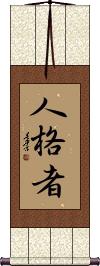
人格者 is a Japanese and Korean title that means “person of character.”
人格者 is unisex, so it can also be used to mean “man of character,” or “woman of character.”
Character
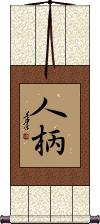
This Japanese word speaks of the quality of your personality, character, personal appearance, or gentility.
Fortitude / Strength of Character
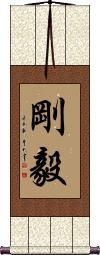
剛毅 is a Japanese and Chinese word that means resolute and firm, fortitude, firmness of character, hardihood, manliness, or macho.
See Also: Perseverance | Strength | Tenacity
Man of Character
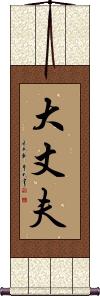
大丈夫 is a Chinese, Korean, and Japanese title that means a manly man, a man of character, a great man, or a fine figure of a man.
In Japanese, this can also be used to mean safe, all right, alright, OK, sure, or “no problem.” Used in Japanese for something that is undoubted or very acceptable.
Man of Remarkable Character / Hero
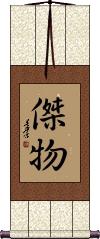
傑物 is a Japanese title that can mean “great man,” “heroic figure,” or “remarkable character.”
You would be giving someone a great honor by presenting this wall scroll to them as a gift.
Work Unselfishly for the Common Good
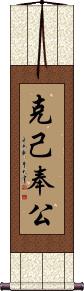
克己奉公 is a Chinese proverb that is often used to express how one should act as a government official. Most of us wish our public officials would hold themselves to higher standards. I wish I could send this scroll, along with the meaning to every member of Congress, and the President (or if I was from the UK, all the members of Parliament, and the PM)
This can also mean: “Place Strict Standards on Oneself in Public Service.”
The story behind this ancient Chinese idiom:
Cai Zun was born in China a little over 2000 years ago. In 24 AD, he joined an uprising led by Liu Xiu, who later became the emperor of the Eastern Han Dynasty.
Later, the new emperor put Cai Zun in charge of the military court. Cai Zun exercised his power in strict accordance with military law, regardless of the offender's rank or background. He even ordered the execution of one of the emperor's close servants after the servant committed a serious crime.
Cai Zun led a simple life but put great demands on himself to do all things honorably. The emperor rewarded him for his honest character and honorable nature by promoting him to the rank of General and granting him the title of Marquis.
Whenever Cai Zun would receive an award, he would give credit to his men and share the reward with them.
Cai Zun was always praised by historians who found many examples of his selfless acts that served the public interest.
Sometime long ago in history, people began to refer to Cai Zun as “ke ji feng gong.”
See Also: Unselfish | Selflessness | Altruism
Trust No One / Trust No Man
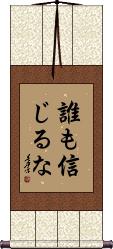
誰も信じるな is as close as you can get to the phrase “trust no man” in Japanese, though no gender is specified.
The first two characters mean everyone or anyone but change to “no one” with the addition of a negative verb.
The third through fifth characters express the idea of believing in, placing trust in, confiding in, or having faith in.
The last character makes the sentence negative (without the last character, this would mean “trust everyone,” with that last character, it's “trust no one”).
Note: Because this selection contains some special Japanese Hiragana characters, it should be written by a Japanese calligrapher.
Trust No One / Trust No Man
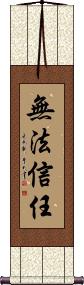
無法信任 is the kind of thing you expect to hear in a spy movie.
“Trust no one, 007!”
The first two characters express the idea of “no way” or “cannot.”
The last two characters mean “trust.”
The characters must go in this order due to Chinese grammar issues and in order to sound natural.
Note: This is not an ancient Chinese phrase by any means. It's just that we received a lot of requests for this phrase.
This is as close as you can get to the phrase “trust no man,” though technically, no gender is specified.
Discipline / Training / Tempering Character
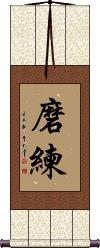
磨鍊 is a form of discipline which suggests training of the mind and character, aimed at producing self-control, obedience, etc.
One of my Chinese-English dictionaries even translates this as “tempering oneself” or turning yourself into hardened steel.
In old Korean Hanja, they use these characters in reverse order but with the same meaning. If you want the Korean version, please click this link instead of the button above: Korean version.
Holy Man / Saint
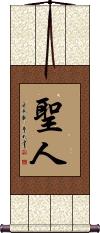
聖人 can mean saint, sage, or holy man.
Note: There is more than one way to express this idea. This one really matches “Holy man” because the second character means “human” or “person” (therefore, this could equally mean “Holy woman”).
Star Man
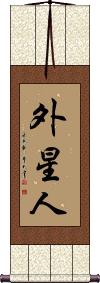
外星人 means “star man” or “space alien” in Chinese.
It is not literally man as in male, but human - as the word 人 does not have a gender attached.
Iron Man
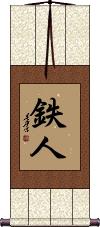
鉄人 is a Japanese title that means iron man or strong man.
鉄人 is sometimes used as a given name romanized as Tetsujin, Temujin, Tetsundo, Tetsuhito, or Tetsuto.
Ip Man
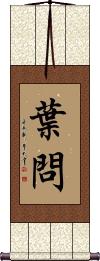
葉問 is the name of “Ip Man” or “Yip Man” (1893-1972).
He was a martial arts practitioner and master. He is perhaps most famous for being the master of Bruce Lee.
Star Man
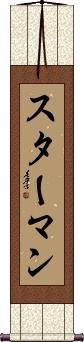
スターマン is the name Star Man in Japanese Katakana.
Note: Because this title is entirely Japanese Katakana, it should be written by a Japanese calligrapher.
Spider-Man

This is the title for Spider-Man in Japanese Katakana.
Note: Because this title is entirely Japanese Katakana, it should be written by a Japanese calligrapher.
Iron Man
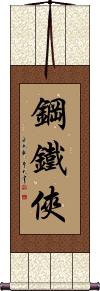
鋼鐵俠 is the Chinese title for Iron Man, the comic book superhero.
Teach A Man To Fish
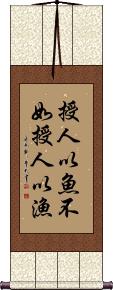
授人以魚不如授人以漁 is the Chinese version of the proverb, “Give a man a fish and you feed him for a day; teach a man to fish and you feed him for a lifetime.”
This implies that knowledge is the best charity.
Spider-Man

This is the title for Spider-Man in Chinese.
You will sometimes see it written 蜘蛛人.
蜘蛛俠 literally translates as “Spider Knight,” while 蜘蛛人 is “Spider Person.”
Adonis / Handsome Young Man
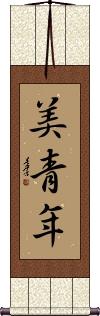
美青年 means handsome young man, or figuratively, Adonis, in Japanese.
Time and Tide Wait for No Man
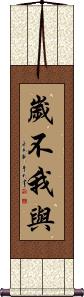
歲不我與 is a Chinese proverb that means is a way to express, “Time and tide wait for no man.”
The literal meaning of these Chinese characters is, “Years don't [for] oneself wait.” In more natural English, it's more like, “Years will pass by, with or without you.”
There is also an alternate version, 时不我待, which literally means “Time doesn't [for] oneself, wait.” In natural English, it's more like, “Time waits for no man.”
Flying Ace / Aviator / Bird Man
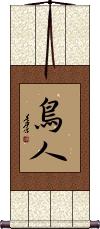
鳥人 means “bird man” or “bird person,” but it is used colloquially in Japanese to mean a flying ace or aviator.
Time and Tide Wait for No Man
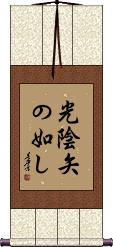
光陰矢の如し is a Japanese proverb that means “time flies like an arrow.” It's very similar to the English idiom, “time and tide wait for no man,” or “life is short.”
The Kanji breakdown:
光陰 = Time (the cycle of light and dark).
[and an]
矢 = Arrow
の = are
如し = Alike
Note: Because this selection contains some special Japanese Hiragana characters, it should be written by a Japanese calligrapher.
A Wise Man Changes His Mind (but a fool never will)
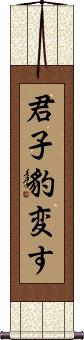
君子豹変す is a Japanese proverb that suggests that a wise man is willing to change his mind, but a fool will stubbornly never change his.
The first word is 君子 (kunshi), a man of virtue, a person of high rank, a wise man.
The second word is 豹変 (hyouhen), sudden change, complete change.
The last part, す (su), modifies the verb to a more humble form.
The “fool” part is merely implied or understood. So if wise and noble people are willing to change their minds, it automatically says that foolish people are unwilling to change.
No Fear
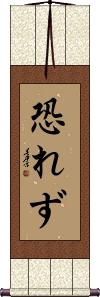
恐れず is probably the best way to express “No Fear” in Japanese.
The first Kanji and the following Hiragana character create a word that means: to fear, to be afraid of, frightened, or terrified.
The last Hiragana character serves to modify and negate the first word (put it in negative form). Basically, they carry a meaning like “without” or “keeping away.” 恐れず is almost like the English modifier “-less.”
Altogether, you get something like “Without Fear” or “Fearless.”
Here's an example of using this in a sentence: 彼女かのじょは思い切ったことを恐れずにやる。
Translation: She is not scared of taking big risks.
Note: Because this selection contains some special Japanese Hiragana characters, it should be written by a Japanese calligrapher.
Boys be Ambitious
Quote from William S. Clark in Japan
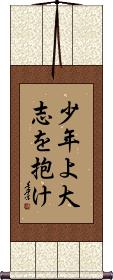
少年よ大志を抱け was a sort of motto or proverb invoked by William Clark after being hired by the Emperor of Japan in 1876 to establish a university in Hokkaido, Japan.
This phrase has been famous across all generations of Japan since that time.
More about William S. Clark's adventures in Japan.
Note: Because this selection contains some special Japanese Hiragana characters, it should be written by a Japanese calligrapher.
Woman of Strong Character / Woman Hero
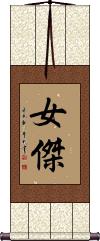
女傑 can mean brave woman, heroine, lady of character, distinguished woman, outstanding woman, and sometimes prominent woman.
Some people might use this to give a title to women like Amelia Earhart, Rosa Parks, Queen Elizabeth the First, Joan of Arc, Mulan Fa, Yevdokiya Nikolayevna Zavaliy, Harriet Tubman, Anne Frank, Clara Barton, and Jane Eyre.
I use it for a woman like Araceli Segarra (the first woman from Spain to climb Mt. Everest) and gave one of my daughters the middle name of Araceli.
Belief / Trust
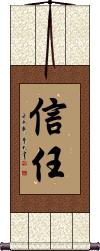
信任 means belief or trust in Chinese characters, old Korean Hanja, and Japanese Kanji.
It can also mean having confidence in or credence.
Great Aspirations / Ambition
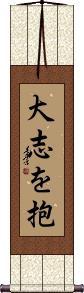
大志を抱 is a single Japanese word that kind of reads like a short proverb.
It suggests that you should have “high aims,” “ambitions,” or “aspirations” in your life.
Great Aspirations / Ambition
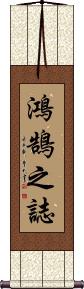
鴻鵠之誌 is a Chinese proverb that implies that having grand ambitions also means that others will not understand your great expectations and ideas.
Though the actual words come from a longer saying of Confucius, which goes, “The little swallows living under the eaves wouldn't understand the lofty ambitions of a swan (who flies far and wide).”
This Confucius quote has led to this idiomatic expression in China that means “think big.” What you'd be saying is “The lofty ambitions of a swan.”
Note that Chinese people sometimes refer to the little swallow as one who does not “think big” but is, instead, stuck in a rut or just leading a mundane life. Therefore, it's a compliment to be called a swan but not a good thing to be called a swallow.
Assassin
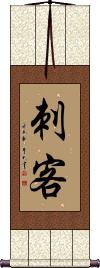
刺客 is the most sophisticated way to write “assassin” in Chinese, Korean and Japanese.
The unsophisticated way just means murderer.
Tempering Makes Strong Steel
Hardship Develops Strong Character
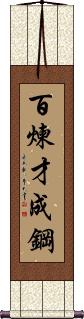
百煉才成鋼 / 百煉纔成鋼 literally translates as: Only after much tempering is steel produced.
Figuratively, this means: True character must be tested in hardship.
This is a mild form of saying, “Whatever doesn't kill me, makes me stronger.”
Fear No Man / Fear Nothing
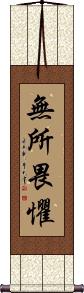
無所畏懼 means “fear nothing,” but it's the closest thing in Chinese to the phrase “fear no man” which many of you have requested.
This would also be the way to say “fear nobody” and can be translated simply as “undaunted.”
No man knows what he owes to his parents until he comes to have children of his own
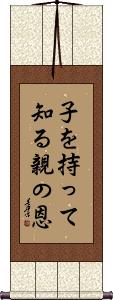
子を持って知る親の恩 literally translates as: Only after you have a baby, you would appreciate your parents (feel the way they do, etc).
This is a bit like the “walk a mile in another man's shoes” saying. Basically, it's about you cannot fully understand the plight of others until you experience it yourself. It also shows appreciation for the plight of parents.
This Japanese proverb can also be translated a few more ways:
No man knows what he owes to his parents till he comes to have children of his own.
One knows not what one owes to one's parents till one comes to have children of one's own.
Only after you have a baby, you will appreciate your parents or feel the way they do.
Only after becoming a parent yourself do you realize how much you owe [how indebted you are] to your own parents.
Note: Because this selection contains some special Japanese Hiragana characters, it should be written by a Japanese calligrapher.
No Fear
(four-character version)
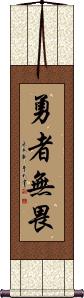
勇者無畏 is a complete sentence that means “Brave People Have No Fear” or “A Brave Person Has No Fear” (plural or singular is not implied).
We translated “No Fear” into the two variations that you will find on our website. Then we checked Chinese Google and found that others had translated “No Fear” in the exact same ways. Pick the one you like best. A great gift for your fearless friend.
See Also: Fear No Man
Purple / Violet
(2 character version)
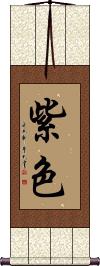
紫色 is the two-character Chinese, Japanese, and old Korean title for the color violet/purple.
The second character means “color,” so this literally means “violet color.”
It's more common to add the “color character” in Asian languages than to say “color” after the name of the color in English. Therefore, this is a natural way to express “violet” in Asian languages.
Perseverance
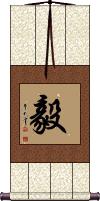
毅 is the simplest way to express perseverance in Chinese and Korean Hanja.
This single-character version leaves a bit of mystery about what kind of perseverance you might want to convey.
In Korean, this is usually associated with “strength of character.”
In Japanese, this character can be pronounced in a dozen different ways (so we have left out the Japanese pronunciation guide that normally appears above). In Japanese, this Kanji would usually be translated as “strong” (perhaps strong-willed).
Bravery / Courage
Single Character for Courage
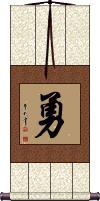
勇 can be translated as bravery, courage, valor, or fearless in Chinese, Japanese and Korean.
勇 is the simplest form to express courage or bravery, as there is also a two-character form that starts with this same character.
勇 can also be translated as brave, daring, fearless, plucky, or heroic.
This is also a virtue of the Samurai Warrior
See our page with just Code of the Samurai / Bushido here
Karma
Single character for Buddhist Karma
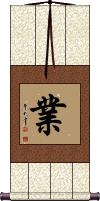
This is the simplest way to express the idea of Karma. This is the Buddhist concept of actions committed in a former life affecting the present and future.
Out of the context of Buddhism, this Karma character means one's profession in life, trade, occupation, business, study, or career.
The Karma definition applies to both Chinese and Japanese for this character. This also works as Korean Hanja as Karma; although the meaning can vary depending on context (my Korean dictionary gives the definition of profession/occupation).
See Also: Buddhism
Ichigo
Japanese animation character
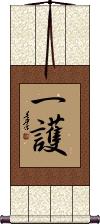
一護 is Ichigo, as in 黒崎一護 (Kurosaki Ichigo), the Japanese animation character who is part human but with transient Shinigami powers.
Brown
Single character for brown color
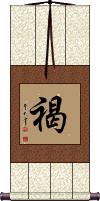
褐 is the most simple way to express brown in Chinese.
It also means brown in Japanese but this character is not often written alone in Japanese (they would tend to write 褐色 (brown color) to refer to brown or the color of tanned skin.
In some contexts, this can refer to gray or a dark color, or coarse hemp cloth.
In the Buddhist context, it can refer to a coarse serge (cheaply sewn clothing) hence poverty.
Note: In Taiwanese Mandarin, this is spoken with the 2nd or rising tone instead of the 4th or falling tone used in the mainland.
Peace of Mind
(five-character version)
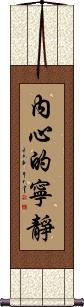
內心的寧靜 is the long way to express the idea of “peace of mind” in Chinese.
The first two characters mean heart or “innermost being.”
The middle character is a connecting modifier.
The last two characters mean peace, tranquility, or serenity.
Some may also translate this as “inner peace,” but I like our other inner-peace options for that idea.
This kind of makes sense in Korean but will have an archaic read - even by those who can understand Korean Hanja.
Danger
A dangerous character in every way
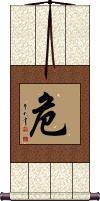
危 means danger, peril, or “to endanger” in Chinese, Japanese, and old Korean.
If you live a dangerous life or want to subtly warn others that you are a dangerous person, this may be the selection for you.
This also means “danger” and sometimes “fear” in Japanese and Korean but is seldom seen outside of compound words in those languages (as a single character, it's kind of like an abbreviation for danger in Japanese and Korean). 危 is also a rather odd selection for a wall scroll anyway. It's only here because people search for danger on our website.
The following table may be helpful for those studying Chinese or Japanese...
| Title | Characters | Romaji (Romanized Japanese) | Various forms of Romanized Chinese | |
| Person of Character | 人格者 | jinkakusha | ||
| Character | 人柄 | hitogara | ||
| Fortitude Strength of Character | 剛毅 刚毅 | gouki / goki | gāng yì / gang1 yi4 / gang yi / gangyi | kang i / kangi |
| Man of Character | 大丈夫 | dai jou bu / daijoubu / dai jo bu | dà zhàng fu da4 zhang4 fu5 da zhang fu dazhangfu | ta chang fu tachangfu |
| Man of Remarkable Character Hero | 傑物 杰物 | ketsubutsu | ||
| Work Unselfishly for the Common Good | 克己奉公 | kè jǐ fèng gōng ke4 ji3 feng4 gong1 ke ji feng gong kejifenggong | k`o chi feng kung kochifengkung ko chi feng kung |
|
| Trust No One Trust No Man | 誰も信じるな | dare mo shin ji ru na daremoshinjiruna | ||
| Trust No One Trust No Man | 無法信任 无法信任 | wú fǎ xìn rèn wu2 fa3 xin4 ren4 wu fa xin ren wufaxinren | wu fa hsin jen wufahsinjen |
|
| Discipline Training Tempering Character | 磨練 / 磨鍊 / 磨鍊 磨练 | mó liàn / mo2 lian4 / mo lian / molian | mo lien / molien | |
| Holy Man Saint | 聖人 圣人 | seijin | shèng rén sheng4 ren2 sheng ren shengren | sheng jen shengjen |
| Star Man | 外星人 | wài xīng rén wai4 xing1 ren2 wai xing ren waixingren | wai hsing jen waihsingjen |
|
| Iron Man | 鉄人 | tetsujin | ||
| Ip Man | 葉問 叶问 | yè wèn / ye4 wen4 / ye wen / yewen | yeh wen / yehwen | |
| Star Man | スターマン | sutaaman / sutaman | ||
| Spider-Man | スパイダーマン | supaidaaman supaidaman | ||
| Iron Man | 鋼鐵俠 | gāng tiě xiá gang1 tie3 xia2 gang tie xia gangtiexia | kang t`ieh hsia kangtiehhsia kang tieh hsia |
|
| Teach A Man To Fish | 授人以魚不如授人以漁 授人以鱼不如授人以渔 | shòu rén yǐ yú bù rú shòu rén yǐ yú shou4 ren2 yi3 yu2 bu4 ru2 shou4 ren2 yi3 yu2 shou ren yi yu bu ru shou ren yi yu | shou jen i yü pu ju shou jen i yü | |
| Spider-Man | 蜘蛛俠 蜘蛛侠 | zhī zhū xiá zhi1 zhu1 xia2 zhi zhu xia zhizhuxia | chih chu hsia chihchuhsia |
|
| Adonis Handsome Young Man | 美青年 | bi sei nen / biseinen | ||
| Time and Tide Wait for No Man | 歲不我與 岁不我与 | suì bù wǒ yǔ sui4 bu4 wo3 yu3 sui bu wo yu suibuwoyu | sui pu wo yü suipuwoyü |
|
| Flying Ace Aviator Bird Man | 鳥人 | chou jin / choujin / cho jin | ||
| Time and Tide Wait for No Man | 光陰矢の如し 光阴矢の如し | kouinya no goto shi kouinyanogotoshi koinya no goto shi | ||
| A Wise Man Changes His Mind (but a fool never will) | 君子豹変す | kun shi hyou hen su kunshihyouhensu kun shi hyo hen su | ||
| No Fear | 恐れず | oso re zu / osorezu | ||
| Boys be Ambitious | 少年よ大志を抱け | shou nen yo tai shi o ida ke shounenyotaishioidake sho nen yo tai shi o ida ke | ||
| Woman of Strong Character Woman Hero | 女傑 女杰 | joketsu | nǚ jié / nv3 jie2 / nv jie / nvjie | nü chieh / nüchieh |
| Belief Trust | 信任 | shinnin | xìn rèn / xin4 ren4 / xin ren / xinren | hsin jen / hsinjen |
| Great Aspirations Ambition | 大志を抱 | tai shi wo idaku taishiwoidaku | ||
| Great Aspirations Ambition | 鴻鵠之誌 鸿鹄之志 | hóng hú zhī zhì hong2 hu2 zhi1 zhi4 hong hu zhi zhi honghuzhizhi | hung hu chih chih hunghuchihchih |
|
| Assassin | 刺客 | shikaku / shikyaku | cì kè / ci4 ke4 / ci ke / cike | tz`u k`o / tzuko / tzu ko |
| Tempering Makes Strong Steel | 百煉才成鋼 / 百煉纔成鋼 百炼才成钢 | bǎi liàn cái chéng gāng bai3 lian4 cai2 cheng2 gang1 bai lian cai cheng gang bailiancaichenggang | pai lien ts`ai ch`eng kang pailientsaichengkang pai lien tsai cheng kang |
|
| Fear No Man Fear Nothing | 無所畏懼 无所畏惧 | wú suǒ wèi jù wu2 suo3 wei4 ju4 wu suo wei ju wusuoweiju | wu so wei chü wusoweichü |
|
| No man knows what he owes to his parents until he comes to have children of his own | 子を持って知る親の恩 | ko wo motte shiru oya no on kowomotteshiruoyanoon | ||
| No Fear | 勇者無畏 勇者无畏 | yǒng zhě wú wèi yong3 zhe3 wu2 wei4 yong zhe wu wei yongzhewuwei | yung che wu wei yungchewuwei |
|
| Purple Violet | 紫色 | murasakiiro murasakiro | zǐ sè / zi3 se4 / zi se / zise | tzu se / tzuse |
| Perseverance | 毅 | see note / seenote / se note | yì / yi4 / yi | i |
| Bravery Courage | 勇 | isamu / yu- | yǒng / yong3 / yong | yung |
| Karma | 業 业 | gou / go | yè / ye4 / ye | yeh |
| Ichigo | 一護 | ichi go / ichigo | ||
| Brown | 褐 | katsu | hè / he4 / he | ho |
| Peace of Mind | 內心的寧靜 内心的宁静 | nèi xīn de níng jìng nei4 xin1 de ning2 jing4 nei xin de ning jing neixindeningjing | nei hsin te ning ching neihsinteningching |
|
| Danger | 危 | ki | wēi / wei1 / wei | |
| In some entries above you will see that characters have different versions above and below a line. In these cases, the characters above the line are Traditional Chinese, while the ones below are Simplified Chinese. | ||||

Successful Chinese Character and Japanese Kanji calligraphy searches within the last few hours...



